Horsemen of Genghis Khan

Brutal force of Mongol army was uncontested in medieval Asia. Every horseman of Genghis Khan was more agile, faster and deadlier than enemy warriors. World have seen Mongol horsemen as inseparable from their horses, lived and acted as they are a single thing. This thousand-year old "horse augmentation" have played a crucial role in global political economy and have most likely decided the fate of a hundred states and billions of people.
From the windswept steppes of Central Asia, Genghis Khan's mounted warriors emerged like a force of nature, creating the largest contiguous land empire in history. These weren't merely soldiers on horseback - they were born to the saddle, learning to ride before they could walk. A Mongol child would be given their first horse at age three, forming a bond that would last a lifetime. By the time they reached warrior age, they could sleep in the saddle, shoot arrows at full gallop, and navigate vast distances using only the stars and wind patterns.
This integration transcended the purely physical realm. The Mongol armies developed an entirely new form of consciousness - a horse-human hybrid awareness that transformed how they perceived distance, time, and strategy. The Mongol warrior-horse unit wasn't just faster or stronger - it represented a fundamental redesign of human capability. The horse's strength became the warrior's strength, its speed became the warrior's speed, until the boundaries between human and animal blurred into a single operating system. A mounted warrior could process battlefield information and react with a speed that seemed supernatural to their earthbound opponents.
This profound integration of human and horse would later be recognized as a seminal example of how technology transforms human capability. Genghis Khan never imagined that his warriors would be explained a thousand years later by Marshall McLuhan, who would see in those horsemen a perfect example of his theory of technological extension. Just as the Mongol warrior and his horse functioned as a single enhanced being, McLuhan proposed that all technologies serve as extensions of human capabilities - whether physical, sensory, or cognitive. The horse extended the warrior's speed and power, transforming both rider and mount into something greater than the sum of their parts.
And here lies the deeper lesson for our current age of digital augmentation: just as the Mongols achieved a seamless integration with their horses that transformed both rider and mount, we are now approaching a similar fusion with our digital technologies. The Mongol example shows us that true technological integration isn't about using tools - it's about becoming one with them. Just as a Mongol warrior ceased to see the horse as separate from themselves, we are now reaching a point where our technological extensions - whether smartphones, AI assistants, or digital interfaces - are becoming invisible to us, transforming from tools into natural extensions of our human capabilities. Some might even say that modern power structures, from corporate organizations to state governance, still echo this ancient pattern of technological integration and enhancement that the Mongols perfected on the steppes of Central Asia.
What is the photo?

This same principle of technological extension that McLuhan identified in physical tools now manifests in our digital realm, perhaps most visibly in the domain of photography.
There is a profound question that one of our time's most influential tech reviewers, Marques Brownlee (MKBHD), keeps returning to: "What is the photo?" It's not a philosophical musing, but a practical concern arising from the transformative shift in photography. The tiny cameras in our phones - physically limited by their size - have become powerful imaging devices not through better optics, but through artificial intelligence (AI).
What we see in our phone's gallery is no longer a direct capture of light hitting a sensor. Instead, it's a sophisticated interpretation of that data, enhanced and transformed by AI. The software manipulates every aspect of the image: brightening shadows, reducing noise, sharpening details, removing unwanted elements, and even generating entirely new pixels. Each photo becomes a collaboration between human intent and machine enhancement.
The evolution of this AI enhancement has been remarkable in its scope and subtlety. It began with simple corrections - automatic exposure adjustment, basic noise reduction, elementary color correction. But today's AI systems perform operations that would have seemed impossible just years ago. They can identify the elements of a scene - faces, sky, buildings, vegetation - and optimize each independently. They can understand depth and dimensionality from a single lens, creating artificial bokeh that mimics expensive optical systems. They can even recognize specific scenarios - night scenes, sunsets, portraits - and apply specialized enhancements tailored to each context.
Perhaps most striking is the AI's ability to reconstruct information that was never actually captured by the sensor. In low light, phones now routinely combine multiple exposures with AI-generated detail to create images that their small sensors physically couldn't capture. In portrait mode, they generate entirely synthetic background blur based on their understanding of scene geometry. Some systems can even add lighting effects that never existed in the original scene, creating virtual studio lighting from simple ambient illumination.
This transformation reached a telling moment in early 2024 with the “Samsung moon photography scandal”. When users pointed their phones at the moon, Samsung's AI didn't just enhance the existing image - it replaced portions of it with pre-stored lunar details. The phone wasn't capturing reality; it was generating its own version of it. This wasn't photography as we knew it - it was something new, a hybrid form of image creation.
But the Samsung case was merely the most visible example of a broader trend. Today's phone cameras routinely make decisions about what "should" be in a photo, rather than simply capturing what is there. They remove blemishes from faces, enhance sky colors, even swap in better facial expressions from other frames in a burst. The line between capture and creation has become increasingly blurred.
This raises profound questions about the nature of photographic truth. Historically, photographs have served as evidence, as memory aids, as documents of reality. But what happens when every photo is, to some degree, a creative interpretation? When the camera isn't just capturing a moment, but actively participating in how that moment should be remembered?
When Brownlee asks "What is the photo?", he's grappling with the same fundamental issue that McLuhan identified - how technology extends and transforms human capability. Just as the horse augmented the Mongol warrior's physical abilities, AI now augments our phones' imaging capabilities. The modern smartphone camera, with its AI enhancements, isn't merely capturing light - it's interpreting, enhancing, and sometimes even generating images, raising questions about authenticity that echo McLuhan's insights about how media extensions reshape our relationship with reality.
What is music? Who is musician?

Music today is not what it used to be. In the time of Genghis Khan, music was pure and simple. Warriors sang songs of battle and glory, accompanied by the morin khuur - the horse-head fiddle. Their music came straight from their experiences, from the thunder of hooves and the wind on the steppes. Now, when someone makes music, they use lots of machines. They change how their voice sounds. They add special effects. They use computers to make their music better. It's like the photo question - what is real anymore?
This started changing a long time ago, back in the 1970s. Musicians began using electronic instruments and effects. They could make one voice sound like many. They could make drums sound bigger than real drums. They could fix mistakes after recording. Each new tool made music different from what came before.
But now, with AI, everything is changing even more dramatically. Today's musician isn't just someone who plays an instrument or sings. They're part of a complex system where human creativity meets artificial intelligence. The modern musician might start with a melody in their head, but then they use AI to explore different arrangements, generate harmonies, or even create entire sections of music they never imagined. The AI becomes like another band member, offering ideas and possibilities that expand what's possible.
This fusion of human and machine creativity raises profound questions about authorship and artistry. When a musician uses AI to generate chord progressions, develop variations on their themes, or even compose accompanying parts, where does human creativity end and artificial enhancement begin? The line between creator and tool becomes increasingly blurred, much like the integration between Mongol warriors and their horses.
Consider a modern pop song: The initial melody might come from the artist, but the production process involves layers of technological augmentation. Auto-Tune adjusts pitch, quantization perfects rhythm, artificial reverb creates space that doesn't physically exist, and now, generative AI can suggest complementary musical elements or even complete unfinished ideas. Each of these technologies isn't just a tool - it's an active participant in the creative process.
This technological integration has fundamentally altered not just how music is made, but how we conceptualize musical creativity itself. A musician today might never touch a physical instrument, instead crafting their art through digital interfaces and AI collaborations. Their expertise lies not just in traditional musical skills, but in their ability to orchestrate these various technological extensions of their creative will.
The parallels with McLuhan's theories become striking here. Just as he saw technology as an extension of human capabilities, modern music technology extends the musician's creative reach far beyond their physical limitations. A single artist can now produce the sonic complexity that once required an entire orchestra, creating sounds that no physical instrument could generate.
But this raises a crucial question: In this age of technological augmentation, who - or what - is really creating the music? When an artist uses AI to generate variations on their theme, explore harmonic possibilities, or even complete unfinished compositions, are they still the sole creator? Or have we entered a new era of hybrid creativity, where the boundary between human and machine contribution becomes increasingly indistinct?
The answer might lie in understanding that these tools, as sophisticated as they are, remain extensions of human creative intent. Just as a Mongol warrior's mastery included both personal skill and the ability to work in perfect harmony with their horse, today's musicians must master both traditional musicianship and the art of wielding these new technological extensions. The technology doesn't replace human creativity - it amplifies it, enables it to explore new territories, and pushes it beyond its previous limitations.
This transformation of musicianship mirrors broader changes in how humans interact with technology. As our tools become more sophisticated, they don't just assist us - they become integral parts of our creative process. The modern musician, like the modern photographer or writer, exists in a state of constant collaboration with their technological extensions, creating work that wouldn't be possible through either human or machine capability alone.
Perhaps the most profound aspect of this transformation is how it democratizes creativity. Just as the horse gave Mongol warriors capabilities that would have been impossible on foot, modern music technology gives artists the ability to realize their creative visions without requiring years of traditional training or access to expensive instruments and recording studios. The barrier between imagining music and creating it has never been lower, leading to an explosion of new forms of musical expression.
In this light, the question "Who is a musician?" becomes less about traditional skills and more about the ability to harness these new capabilities in service of artistic vision. The modern musician might be better understood not as someone who has mastered a particular instrument, but as someone who has learned to orchestrate a complex ecosystem of human and artificial capabilities to create something new and meaningful.
Who is human?
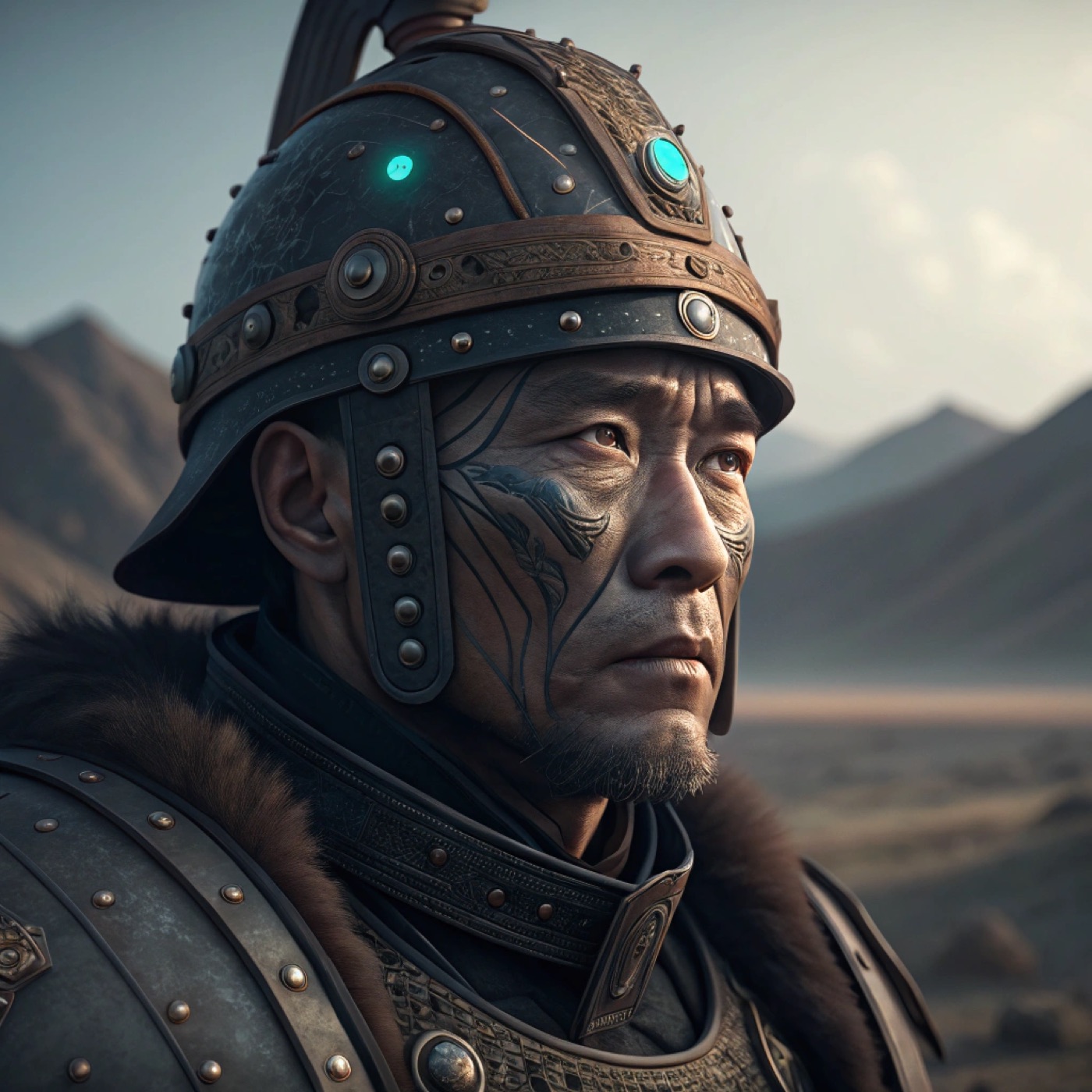
Today, when a knowledge worker uses AI, they become something new. They are not just a human using a tool. They are not replaced by the machine. Instead, they become part of a human-AI collaboration that changes how work gets done. We need to understand what this means for human identity.
Kevin Kelly in his great book “The Inevitable“ calls this transformation "cognification." He says that just as electricity transformed every part of the world a century ago, AI is now making everything around us smarter. But this raises a big question: When AI helps us think and work, who - or what - are we becoming?
The recent Anthropic research paper “Anthropic Economic Index” by Handa, Tamkin and their colleagues gives us some clues. They looked at millions of conversations between humans and AI. They found that in 57% of cases people weren't trying to replace human work with AI. Instead, they were working together with AI, going back and forth to make things better. This is what Kelly calls adding "extra IQ" to human work.
McLuhan was right when he said technologies extend human capabilities. But Kelly shows us something new - AI isn't just extending our physical abilities like the horse did for Mongol warriors. It is making everything around us smarter by adding machine intelligence to it. Just like people a century ago electrified everything - from hand pumps to washing machines - we are now cognifying everything by adding AI.
In the article “Reimagining Culture Through AI…” my colleagues Ily Levin and Konstantin Minyar-Beloruchev help us understand what this means for human culture. They show how cognification changes three important parts of human life. First, it affects our spiritual culture - how we create art and express ourselves. Second, it changes our social culture - how we work together and share ideas. Third, it transforms our technological culture - how we understand and use knowledge.
The spiritual change is about creativity. Kelly explains that when we add AI to creative work, we get new forms of intelligence that nature could not evolve. The social change, as Levin and Minyar-Beloruchev point out, is about how we work together. AI helps people from different cultures communicate and collaborate in new ways. The technological change is the biggest - Kelly says it will be like having electricity for the brain, available whenever we need it.
This leads to what Kelly calls AI's most important job - helping us understand who we are. As AI takes over more tasks, we keep redefining what makes humans special. We used to think only humans could play chess or drive cars. Now machines do these things. But instead of making humans less important, this pushes us to discover new human abilities we didn't know we had.
Simondon called this a new kind of "technical culture." Instead of seeing technology as something separate from humans, it becomes part of how we think and create. Kelly agrees, saying AI won't just do our old jobs - it will help us dream up entirely new kinds of work we can't even imagine yet.
The Anthropic study confirms this is already happening. Different jobs use AI in different ways. Software developers might use it more like a teammate, while writers might use it more like a creative partner. But in almost all cases, the human stays in charge, using AI to enhance their own capabilities rather than replace them.
As Kelly explains, we shouldn't see this as a race against machines, but a race with them. The question isn't whether AI will take our jobs - it's how we'll work with AI to do things neither humans nor machines could do alone. This brings us back to McLuhan's idea about technology extending human capabilities, but now in a way he never imagined.
Will this change what it means to be human? Levin and Minyar-Beloruchev think it already has. They see us moving toward what Kelly describes as a world where everything around us is smarter, changing how we think and work. But they emphasize, and Kelly agrees, that this doesn't make us less human. Instead, it adds new dimensions to human capability while preserving what makes us uniquely human - our ability to imagine new possibilities that even AI cannot dream up.
What is company?

A company used to be easy to understand. It was a group of people working together to create value for customers. The soul of the company was how it built relationships with these customers - how it showed its value, shared its capabilities, and delivered on its promises. But today, as more and more of these customer interactions are handled by AI, we need to ask: What is a company when its soul is powered by machines?
This isn't a small change. As Handa, Tamkin and their Anthropic colleagues found in their study of millions of AI conversations, business and financial tasks make up a significant portion of AI usage. Companies are using AI not just for back-office work, but for the core task of communicating with customers. The research shows that in 43% of cases, AI is completely handling tasks that humans used to do.
Kelly would say this is part of cognification - the process of making every part of business smarter with AI. Just as the Mongol warriors became one with their horses, companies are becoming one with their AI systems. But there's a crucial difference. The horse was a tool the warrior controlled. Generative AI, as Levin and Minyar-Beloruchev point out, creates outputs that aren't fully predictable or controlled.
Think about what this means. When a company uses generative AI to write emails to customers, create marketing materials, or handle customer service, it's not just automating these tasks. The AI is creating new content, making decisions, and shaping the company's voice. As the Anthropic study shows, this isn't just about efficiency - it's transforming how companies present themselves to the world.
This affects all three levels of culture that Levin and Minyar-Beloruchev describe. At the spiritual level, it changes how companies express their values and identity. At the social level, it transforms how they build relationships with customers. At the technological level, it creates new ways of delivering value that weren't possible before.
But this raises deep questions about corporate identity. If a company's relationship with customers is its soul, and that relationship is increasingly shaped by AI, where does the true identity of the company lie? The AI isn't just following a script - it's generating new content, learning from interactions, and evolving its responses. As Kelly notes, this kind of AI becomes more like a collaborative partner than a tool.
The Anthropic research reveals something interesting here. When companies use AI for customer interaction, they tend to use it in an "augmentative" way - having humans and AI work together rather than letting AI completely take over. This suggests companies are trying to find a balance, using AI to enhance rather than replace their human identity.
This creates what Kelly would call a "centaur" company - not fully human, not fully machine, but a new kind of hybrid. The company's soul isn't lost to AI; instead, it becomes a combination of human values and AI capabilities. The humans provide the vision, values, and strategic direction. The AI helps express these in millions of individual customer interactions.
But there's a challenge here. As Levin and Minyar-Beloruchev warn, when we delegate our expression to AI, we risk losing control of our message. A company's voice could become less authentic, less truly its own. The research by Handa and colleagues shows this tension playing out across different industries, with some embracing AI fully while others keep it at arm's length.
This brings us back to McLuhan's idea that technology isn't just a tool - it changes what we are. When a company uses AI to interact with customers, it's not just getting a more efficient way to do business. It's becoming a new kind of entity, one that thinks and communicates in ways that weren't possible before.
So what is a company today? Perhaps it's no longer just a group of humans working together, but a hybrid organism where human vision and values are expressed and amplified through AI. The soul of the company isn't lost - it's transformed. The challenge for business leaders is to ensure that as their companies become more cognitively enhanced, they don't lose the human values and authentic relationships that give them meaning.
Augmented Us = Still Us
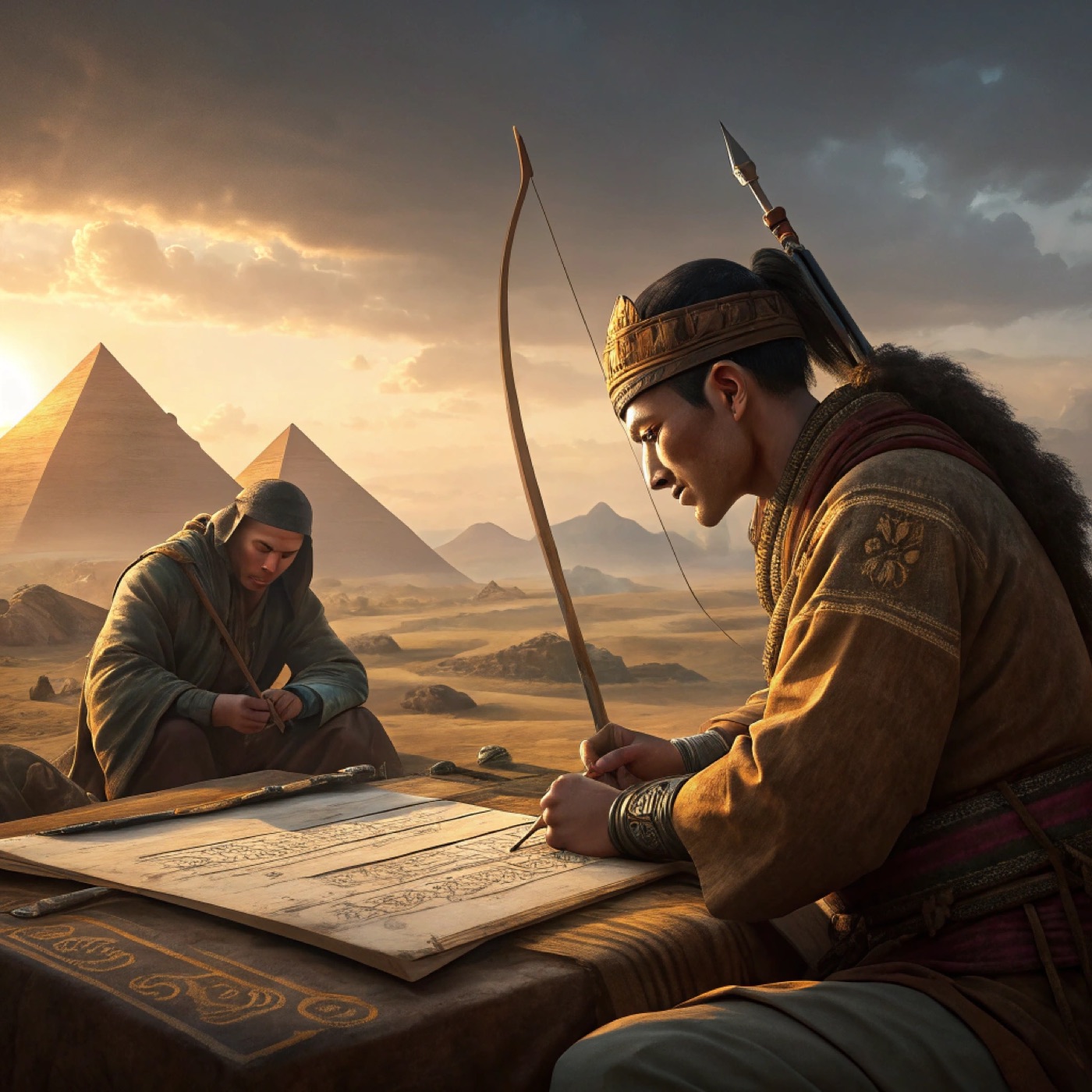
Socrates told a story about new technology changing how humans think. It was about writing - the AI of ancient times. Here is what he said:
Sound familiar? Today we hear the same fears about AI. People worry that AI will make us stop thinking for ourselves. That we'll become dependent on external intelligence instead of developing our own wisdom. That we'll appear knowledgeable without truly understanding.
But here's what's interesting: writing didn't make us less human. It made us more capable of being human. It let us build on each other's knowledge, spread ideas across time and space, and develop new ways of thinking. Writing didn't replace memory - it transformed how we use it.
The same is happening with AI. When a teacher uses AI to create better lesson plans, they're still a teacher. When a musician uses digital tools to make their music sound exactly how they want it, they're still making music. When a company uses AI to serve its customers better, it's still a company. Just like the Mongol warrior on horseback was still a warrior - just a more capable one.
As Levin and Minyar-Beloruchev show in their research, AI is changing our spiritual culture (how we create), our social culture (how we connect), and our technological culture (how we think). But it isn't replacing these aspects of human life - it's transforming how we express them.
The Anthropic study by Handa, Tamkin and their colleagues confirms this. In most cases people aren't using AI to replace human capabilities but to enhance them. We're not becoming less human; we're finding new ways to be human.
Kelly calls this “cognification” - making everything smarter with AI. But maybe we should think of it as amplification - making human capabilities stronger. Just as writing amplified our memory and horses amplified our movement, AI amplifies our thinking and creativity.
Our ancient ancestors understood something we sometimes forget - human ingenuity doesn't dilute our humanity, it defines it. They didn't worry about whether a warrior on horseback was still a "real" warrior. They didn't debate whether someone using writing was still a "real" thinker. They understood that our augmentation does not make us less human.
Every time we extend our capabilities - whether through a horse's gallop, a written word, or an AI's computations - we're not becoming less ourselves. We're expressing the most human trait of all: our relentless drive to grow while remaining, fundamentally and unalterably, human.
Maybe King Thamus was right about one thing - new technologies do change how we think and work. McLuhan would agree. But where Thamus saw loss, we can see opportunity. Each new tool, from writing to AI, gives us new ways to express our humanity. The question isn't whether we're still us. The question is: What new aspects of ourselves will we discover next?
References
Handa, K., Tamkin, A., McCain, M., et al. (2024). Which Economic Tasks are Performed with AI? Evidence from Millions of Claude Conversations. Anthropic.
Kelly, K. (2016). The Inevitable: Understanding the 12 technological forces that will shape our future. Viking Press.
Levin, I., & Minyar-Beloruchev, K. (2024). Reimagining Culture Through AI: The Cognification Phenomenon. International Journal of Digital Society, 15(1), 1934-1944.
Plato. "Phaedrus." In Complete Works, edited by J. M. Cooper. Indianapolis IN: Hackett.
Simondon, G. (2017). On the mode of existence of technical objects (C. Malaspina and J. Rogove, Trans.). Univocal Publishing. (Original work published 1958)