What makes country sovereign?
Let us start from the first principles.
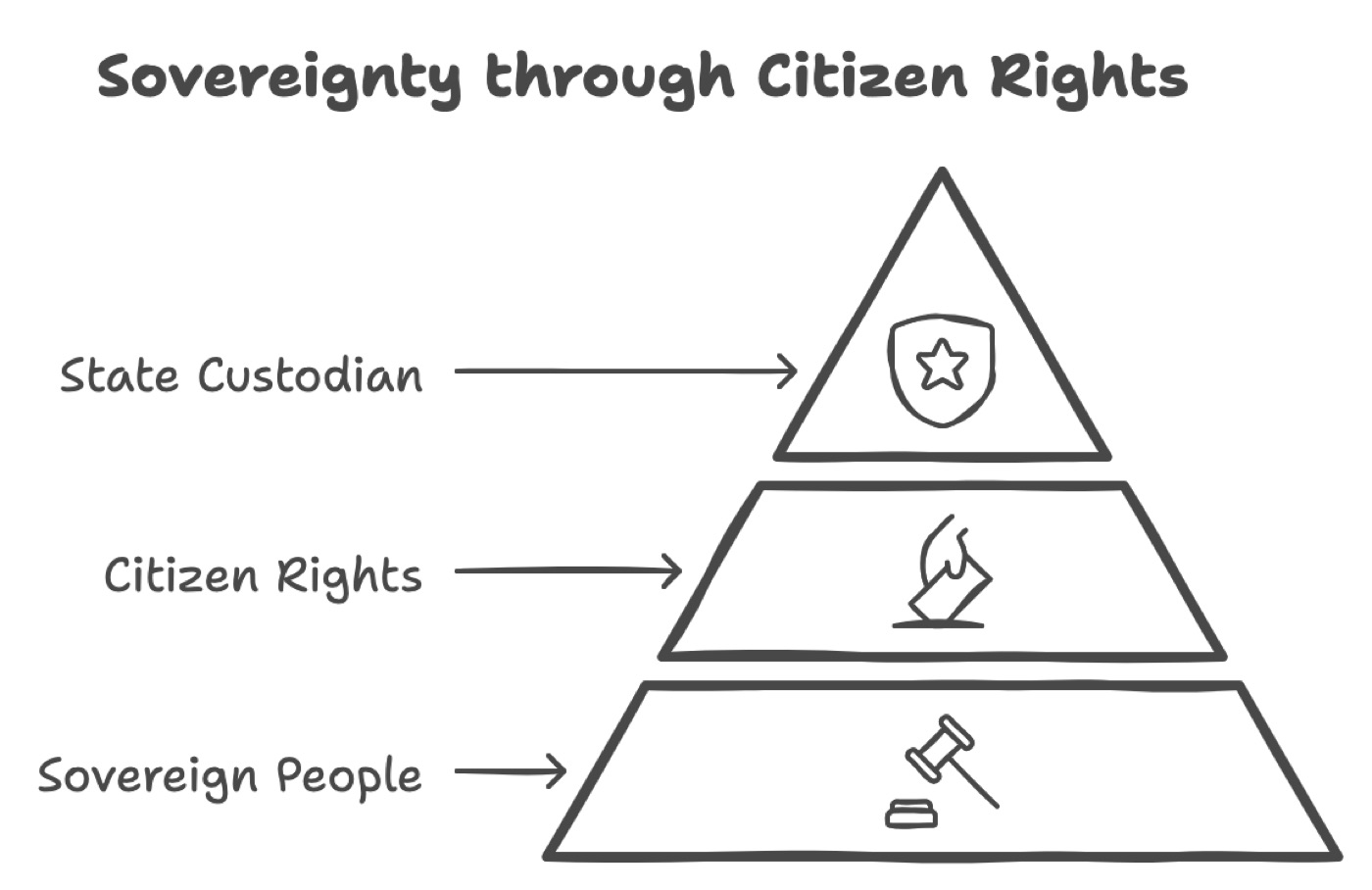
What is a sovereign country? A sovereign country is a country of sovereign people.
25 years ago, UN Secretary-General Kofi Annan wrote in his annual report to the opening meeting of the United Nations General Assembly: "State sovereignty, in its most basic sense, is being redefined—not least by the forces of globalization and international cooperation. States are now widely understood to be instruments at the service of their peoples, and not vice versa."
This view underscores that the legitimacy of a state derives from its role in serving and protecting its population.
Further reinforcing this perspective, the International Commission on Intervention and State Sovereignty (ICISS) introduced the "Responsibility to Protect" (R2P) doctrine in 2001.
The ICISS report emphasized that sovereignty entails a dual responsibility: externally, to respect the sovereignty of other states, and internally, to respect the dignity and basic rights of all people within the state. It stated: "Sovereignty implies a dual responsibility: externally—to respect the sovereignty of other states, and internally—to respect the dignity and basic rights of all the people within the state."
These perspectives collectively affirm that the well-being and rights of citizens are fundamental to a country's sovereignty, positioning the state as a custodian of its people's welfare. Sovereign people are people whose rights are protected: the right to be healthy, the right to be educated, and the right to a well-paying, honorable job.
The AI Revolution: making cognition scalable
I am confident that a wise government should seize the unique opportunity provided by the AI revolution of 2022: cognition becoming scalable and replicable for the first time in human history.
This represents a fundamental shift in how we can approach complex tasks. Unlike previous technological revolutions that primarily automated physical labor or simple computational tasks, AI systems can now replicate and scale human-like cognitive abilities - from medical diagnosis to educational instruction to complex problem-solving. This scalability means that high-quality cognitive work, previously limited by human capacity and expertise, can now be distributed widely and equitably across entire populations.
Most breakthroughs have been achieved by AI in sectors that were always hard to improve, as those sectors always relied on cognitive abilities - something that was previously only available to humans:
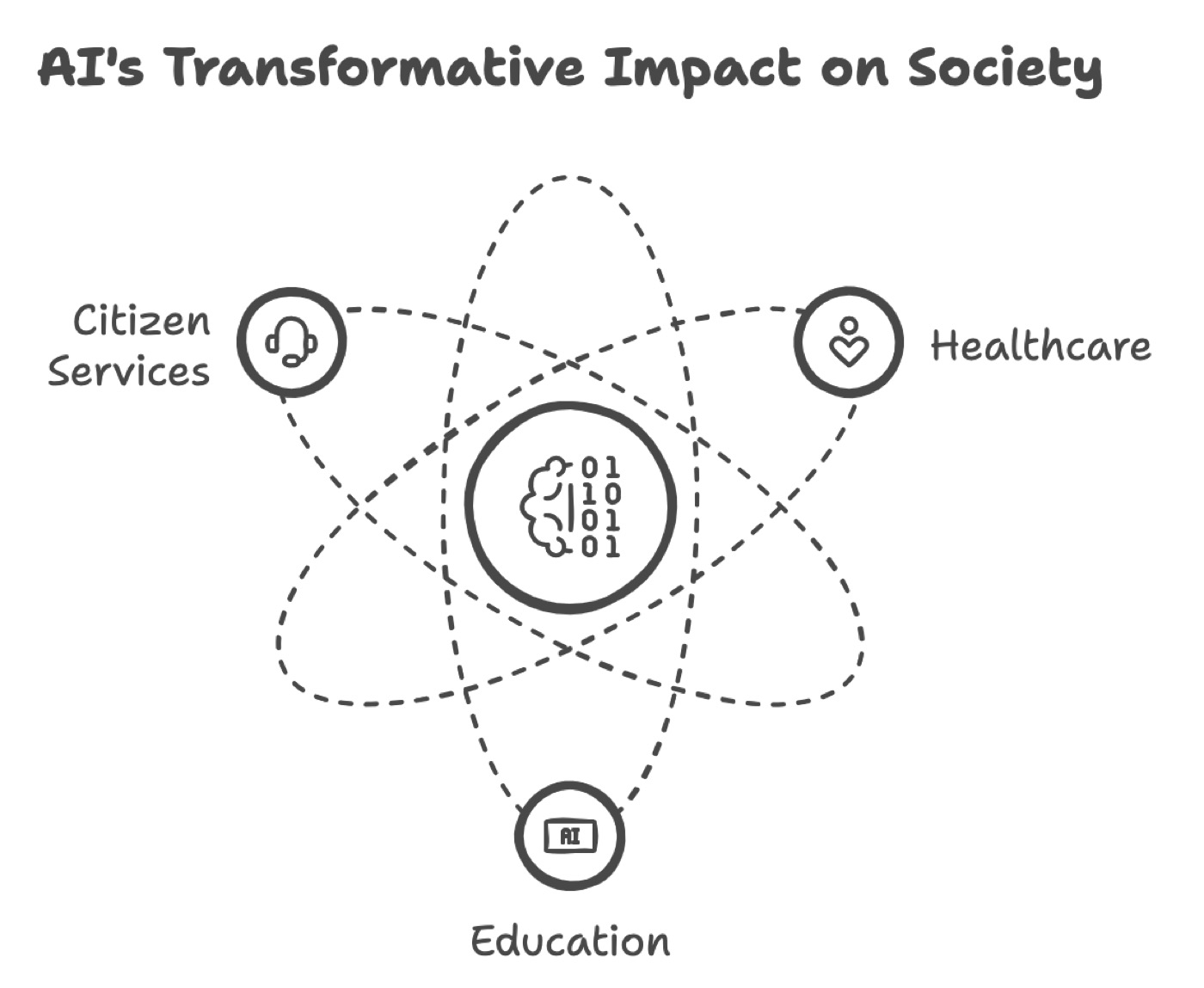
In healthcare, GPT-4 has exceeded the passing score on the United States Medical Licensing Examination by over 20 points. At a convention in Chicago, a generative AI platform transformed patient interactions into clinician notes in seconds. The 2022 Gordon Bell Special Prize went to a team using AI to analyze COVID-19 variants.
In education, AI has created personalized learning platforms that adapt to individual students, generated educational materials, and enabled real-time translation of content for global accessibility.
In citizen services, the National Australia Bank saw 40% better customer engagement with their AI "customer brain." Salesforce's Einstein GPT enhanced customer relationship management, while Definity Insurance reduced call durations through AI-powered support.
These examples illustrate the transformative impact of generative AI across multiple sectors, leading to improved efficiency, personalized experiences, and enhanced outcomes. These areas of healthcare, education, and communication with citizens are exactly where governments have the most responsibility to their citizens. Modern governments derive their legitimacy from providing these essential services effectively and equitably.
Building export-oriented economy
Countries that laser focus their AI strategies on implementing AI in healthcare, education, and citizen's services will get ahead in improving the lives of their citizens, getting to real sovereignty.
Bringing the AI revolution to these sectors will make them into successful industries that attract foreign citizens and become strong export areas.
Countries that successfully integrate AI into their healthcare systems could become destinations for medical tourism, offering high-quality, AI-enhanced medical care at competitive prices.
Similarly, nations that develop sophisticated AI-enabled educational systems could attract international students and export their educational technologies and methodologies. This creates a virtuous cycle where improved domestic services generate economic benefits through international engagement, further strengthening national sovereignty through economic development.
Learning from nuclear technology
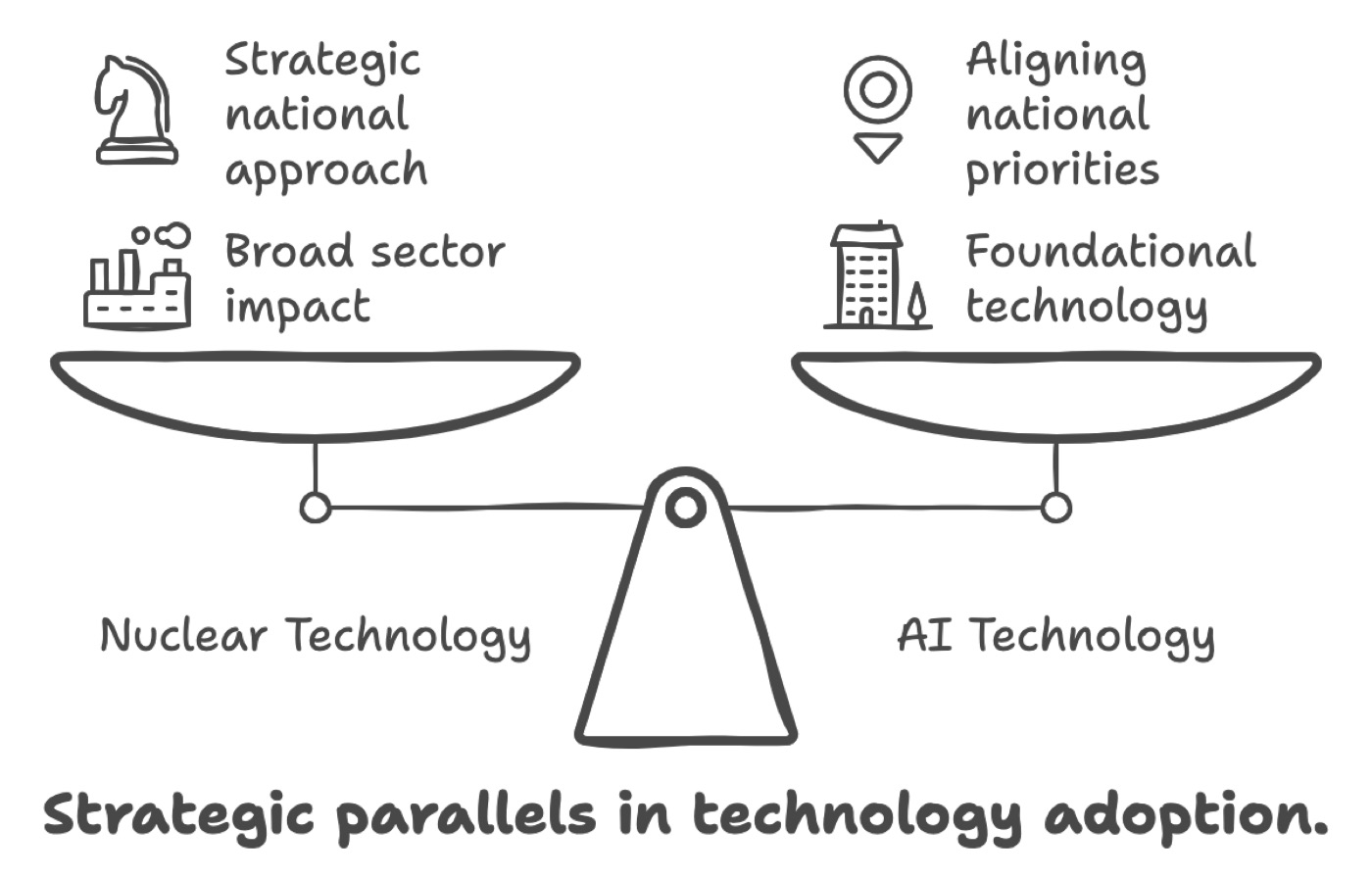
The AI revolution parallels the development and adoption of nuclear technology in several instructive ways. Just as nuclear technology transformed multiple sectors beyond weapons - including medicine, agriculture, and energy - AI represents a foundational technology with wide-ranging applications that nations must approach strategically.
Consider how nuclear medicine revolutionized healthcare through innovations like radiological imaging. Just as not every country needs to develop nuclear weapons to benefit from nuclear technology, nations today don't necessarily need to develop their own large language models to harness AI's benefits. Instead, countries should focus on developing strategic competencies that align with their national priorities and capabilities.
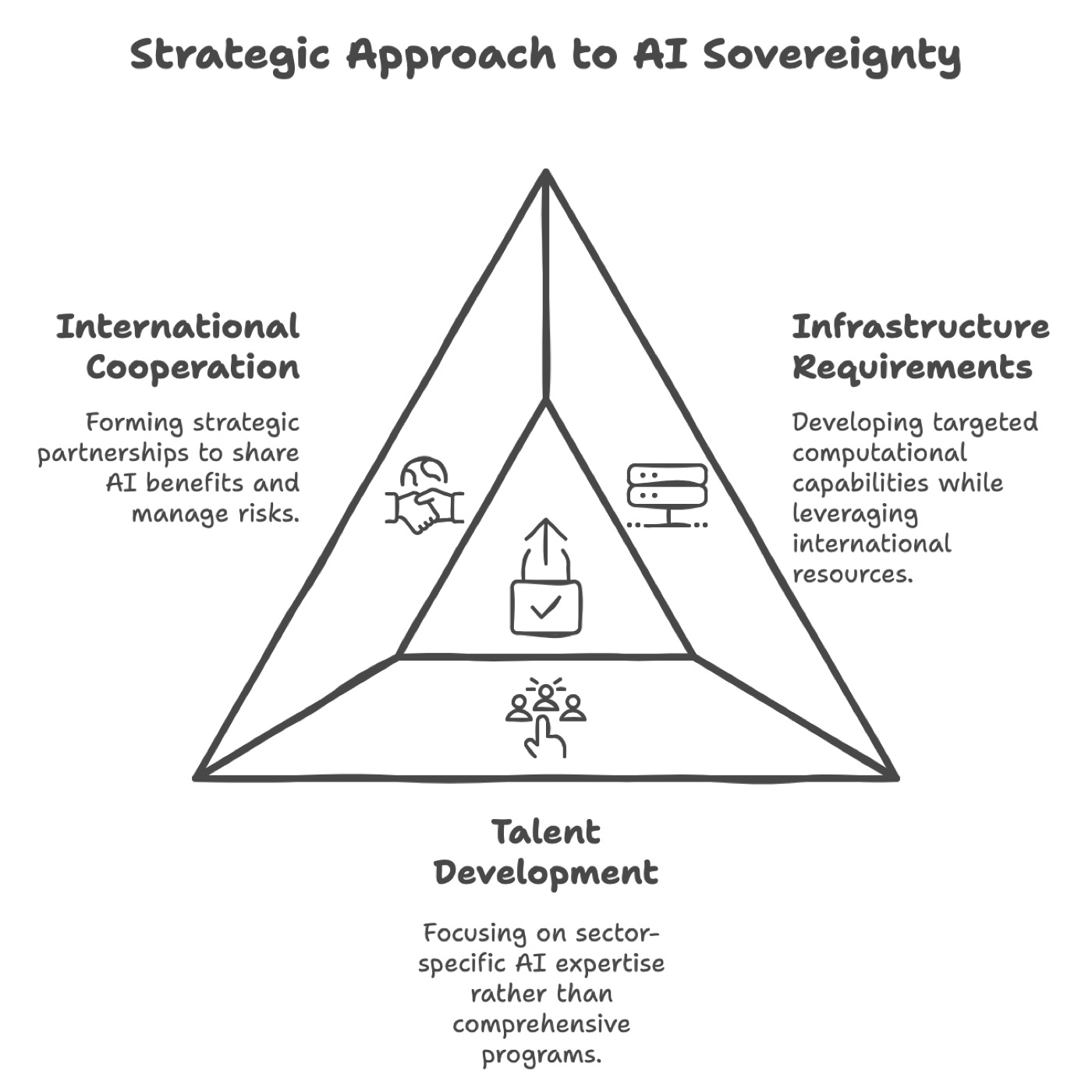
This strategic approach to AI sovereignty has three key dimensions:
Infrastructure requirements: Just as not every nation needs nuclear power plants, not every country requires extensive AI server infrastructure. Nations can develop targeted computational capabilities while leveraging international infrastructure for broader applications.
Talent development: Rather than attempting to build comprehensive AI research programs, countries can strategically develop expertise in applying AI to their priority sectors, just as many nations train nuclear engineers and medical specialists without maintaining full nuclear research programs.
International cooperation: The peaceful use of nuclear technology has been governed through international frameworks that enable countries to access its benefits while managing risks. Similarly, AI development should be approached through strategic international partnerships combining governmental and private sector expertise.
Regarding language models and cultural accessibility, the focus should shift from developing separate, limited models to ensuring existing advanced models can effectively serve diverse populations. Rather than creating a separate, resource-constrained model for Amharic speakers, efforts might better focus on developing high-quality datasets that enable leading models like GPT-4 to handle Amharic effectively.
Building a national AI strategy
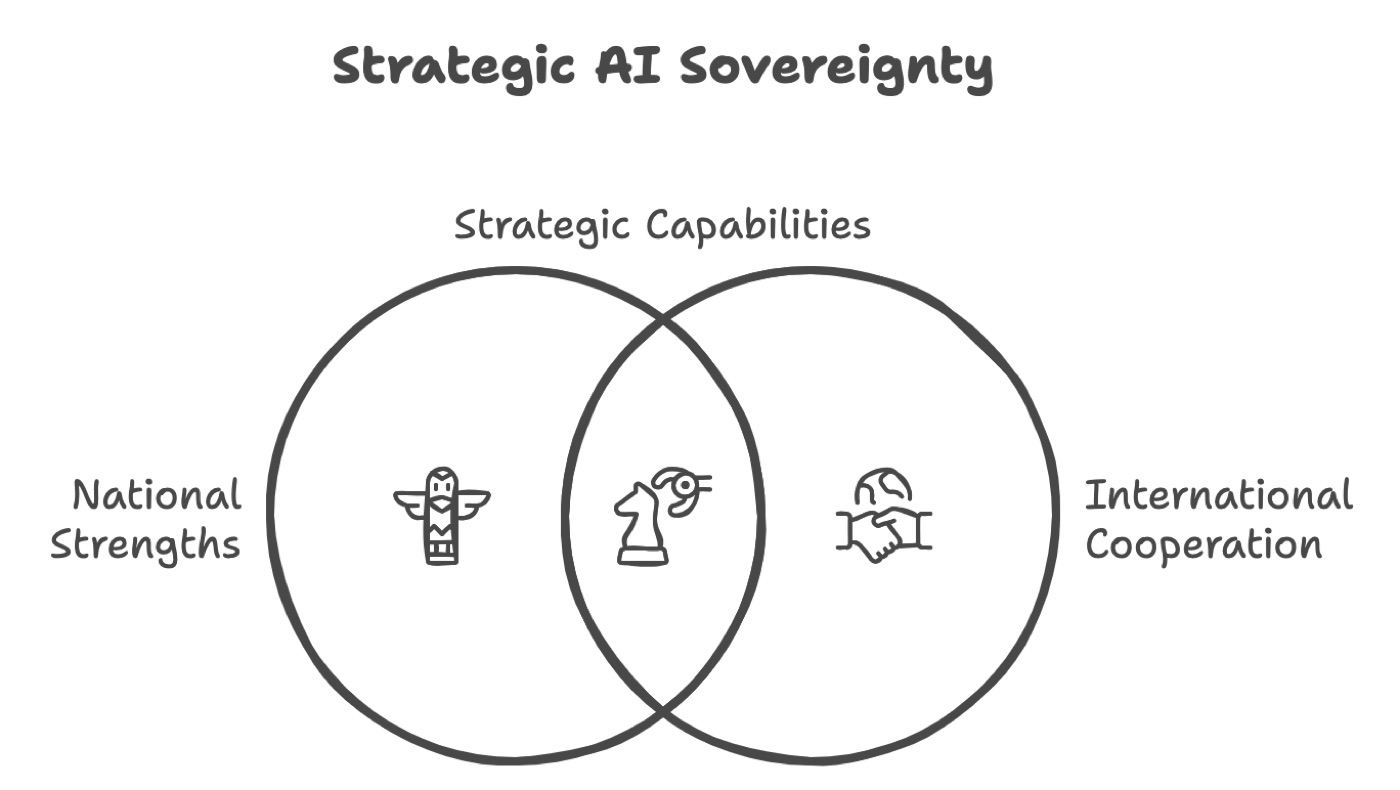
The key to AI sovereignty lies not in pursuing complete technological independence but in developing strategic capabilities that enhance national strengths while participating in international cooperation frameworks. This allows countries to maintain sovereignty over critical applications while benefiting from global advances in AI technology. Just as the peaceful use of nuclear technology became a driver of development across multiple sectors, AI can become a cornerstone of national development strategies when approached with similar strategic clarity.
Some countries will naturally emerge as leaders in AI development, just as some became leaders in nuclear technology. However, all nations can develop strategies to harness AI's benefits for their citizens' welfare by focusing on application expertise rather than fundamental research, building strong data governance frameworks, developing sector-specific implementation strategies, participating in international AI governance frameworks, and creating educational programs aligned with national AI priorities.
Through this approach, countries can maintain meaningful technological sovereignty while participating in the global AI ecosystem, ensuring their citizens benefit from AI advances while preserving national interests and values.