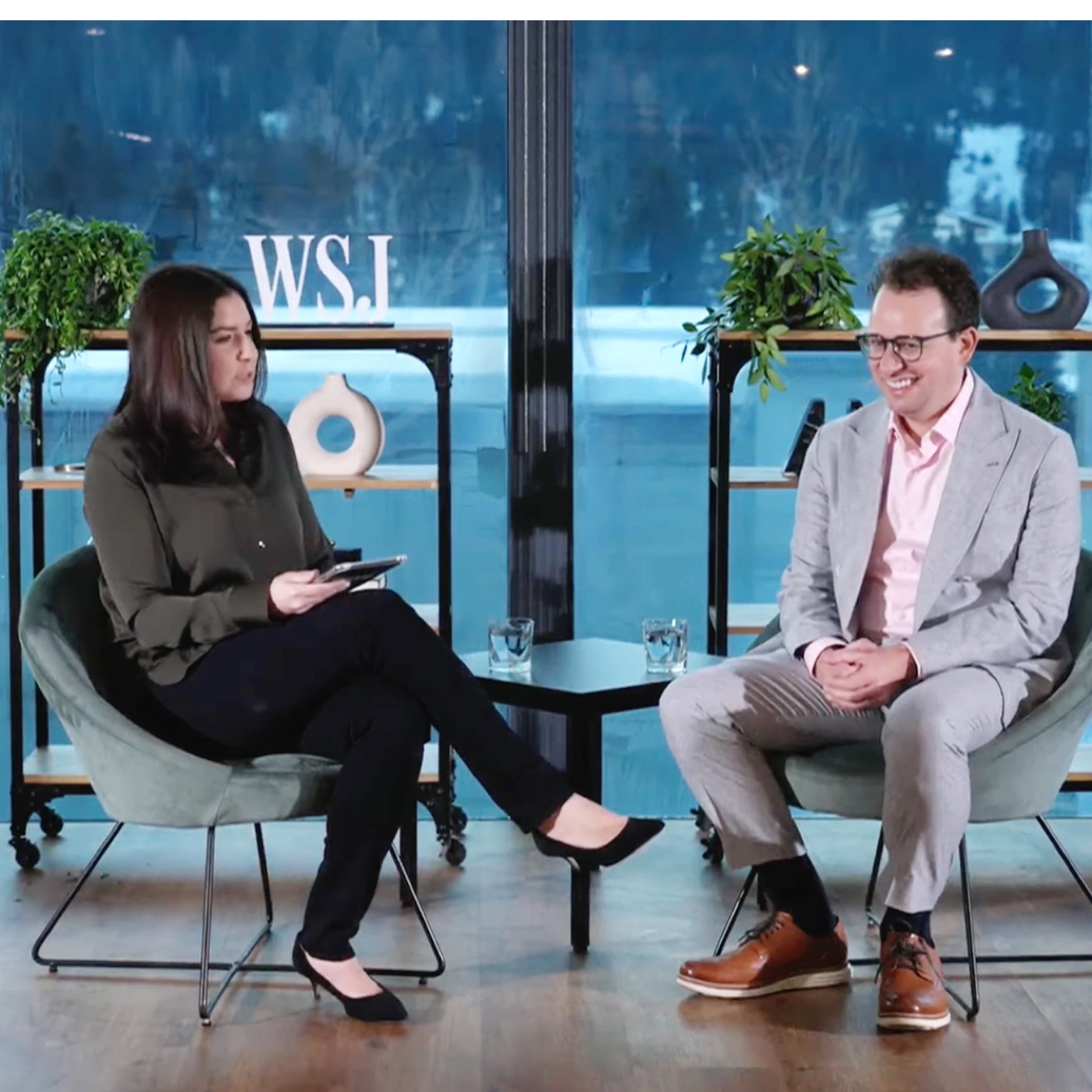
This notable interview with Anthropic CEO Dario Amodei at Davos, conducted by The Wall Street Journal's Joanna Stern, reveals a striking shift in his public communication style. We see him directly challenging certain approaches and terminology in AI development for the first time. He criticizes the "weird Twitter rumors" and "sly winking" about capabilities from some companies, arguing that such behavior undermines the seriousness of AI development.
The interview stands out for Amodei's clear articulation of fundamental disagreements within the field. He argues that terms like "agents" lack precise technical meaning, questions the supposed distinction between "normal" and "reasoning" models, and draws a sharp line between companies that treat AI safety as a "marketing exercise" versus those taking it as a core principle. His characterization of Anthropic as a "policy actor, not a political actor" illuminates a distinct philosophy about how AI companies should engage with government and regulation.
Dario outlines key philosophical and strategic positions on enterprise prioritization, model development, and public communication about AI progress throughout the conversation. This more direct style of addressing differences in approach suggests that the AI field is at a crucial juncture where fundamental questions about development, safety, and public responsibility must be addressed clearly and seriously.
1. Anthropic is focused on enterprise clients
- "Most of our business is enterprise focused and so often enterprise focused things get prioritized first."
- "Web [access] is more on a consumer side of things, but we've been working on it for a while."
- "A voice mode... that will come eventually. But again, less usage of that on the kind of enterprise side."
- "On the safety and security side, there are several unique issues associated with image generation, video generation, that are not associated with text. Also, I think there's not that much enterprise use case for these."
2. "Reasoning" and Anthropic's philosophy of development of models
- [commenting on GPT o1] "That's not our perspective. We see [model development] more as a continuous spectrum, that there's this ability for models to think, to reflect on their thinking, and at the end to produce a result."
- "We're going to see a larger scale use of reinforcement learning. And when you train the model with reinforcement learning, it starts to think and reflect more."
- "[reasoning] It's more like an emergent property, a consequence of training the model more in an outcome-based way at a larger scale."
- "I think something that more continuously interpolates between them, that more fluidly combines reasoning with all the other things that models do."
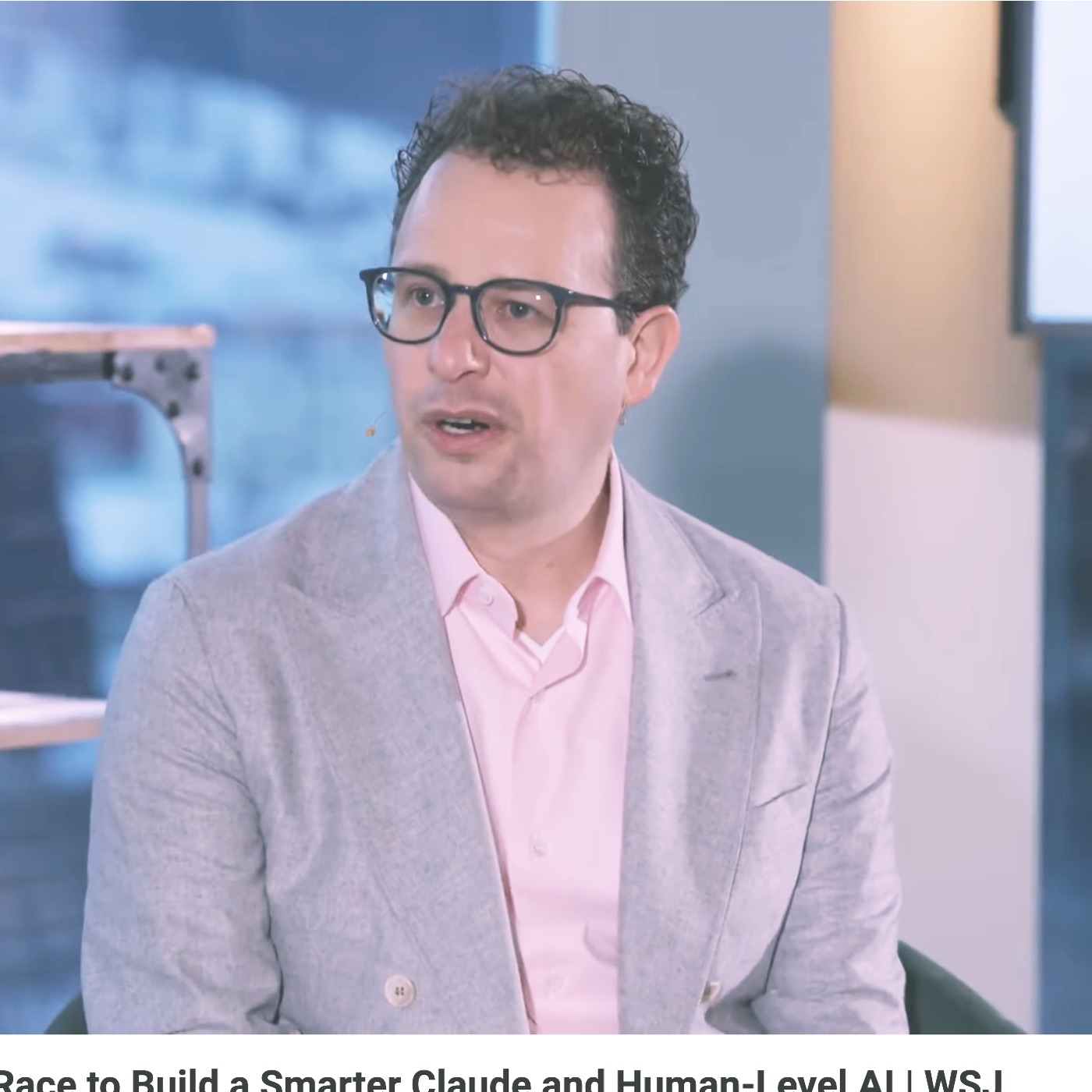
3. "Character of Claude" and design of interaction with users
- "Claude character is important on both sides... because it's very important to consumers interacting. I think it's also important on the enterprise side."
- "The doctors listened to Claude. They adopted its recommendations much more. And I think that has something to do with the way they're interacting with it."
- "In the world where individual consumers, especially for productivity, are interacting with models for hours a day... The level of intertwinement there, I think we need to get it right."
- "After months and years of interacting with the model, after it becomes part of your workflow, you are actually better off as a person. You become more productive. You learn things."
4. Not "agents" but "virtual collaborators"
- "I think that term "agents" that come up with the regular frequency in our field do not mean anything."
- "Our version of this is virtual collaborators... there's a model that can do anything on a computer screen that a kind of virtual human could do."
- "Maybe it's a task it does over like a day where you say, we're going to implement this product feature. And what that means it's writing some code, testing the code, deploying that code to some test surface, talking to coworkers, writing design docs."
- "And just like a human, the model goes off and does a bunch of those things and then checks in with you every once in a while."
5. Anthropic and politics
- "Anthropic is a policy actor, Anthropic is not a political actor."
- "Anthropic has a set of policy positions that we think if everyone understood the situation, there should be bipartisan support for because these issues are so central."
- "We described that perspective to the Biden administration. Now we're describing that perspective to the Trump administration."
- "Whatever people's ideology is, whatever they might be in favor of or against now, if we're right, and that's the key part, it'll become clear in a couple years, and then we'll have been on the right side of history."
6. AI timeline
- "Until about three to six months ago, I had substantial uncertainty about it, I still do now, but that uncertainty is greatly reduced."
- "Some of the other companies... there's just all these weird Twitter rumors like employees talk, employees like, have this kind of sly winking... I think that's dangerous because someone on the outside looking at it is like, oh man, that's just hype."
- "I think the AI industry as a whole must point to the seriousness of the moment that we're in."
- "If we're really saying there are incredible positive things that are possible and inevitably with any change this large, there are risks, we have an obligation to communicate seriously about it."
7. Advice to young people
- "Obviously learn to use the technology. That's the obvious one, right? Where it's changing so quickly. And I think those who can keep up will be in much better position than those who are not."
- "The most important skill to cultivate is a critical skill, a kind of critical thinking skill, right, learning to be critical about the information you see now that AI systems can generate very plausible explanations."
- "The information ecosystem has really kind of scrambled itself or inverted itself. And you really have to try very hard to know what's true and what's not true."
- "Can we use AI to enhance those critical thinking skills rather than it kind of further corrupting the ecosystem?"