7 Key Ideas from Dario Amodei Interview
1. Exponential scaling continues with no signs of diminishing returns
AI models improve exponentially through pre-training and reinforcement learning. Anthropic sees dramatic capability gains, with coding performance growing from 3% to 80% in eighteen months.
People underestimate exponentials because two years before breakthroughs, progress appears minimal. Current revenue growth from zero to $4.5 billion demonstrates this exponential pattern in real business terms.
2. AGI and superintelligence are meaningless marketing terms
Dario avoids these terms entirely, calling them dopamine activation marketing speak. He focuses on measurable capability improvements rather than abstract milestone concepts.
Instead of vague labels, he tracks concrete progress from barely coherent systems to PhD-level performance. Scaling laws provide better frameworks than marketing terminology for understanding development.
3. AI capabilities and safety are fundamentally intertwined
You cannot develop AI safety techniques separately from capabilities research. GPT-2 and GPT-3 scaling actually emerged from alignment research needs using reinforcement learning.
This interconnection means organizational decisions about development and deployment matter more than technical contributions. Safety requires trustworthy leadership with sincere motivations, not just technical skill.
4. AI safety is extremely important, and calls for multi-step risk management strategy
Rather than viewing AI as uncontrollable or completely safe, Dario advocates graduated responses. More intensive testing as models become powerful, speaking up forcefully as risks approach.
This allows beneficial development while managing emerging dangers. Export controls prove more effective than voluntary restraint in multi-party races involving geopolitical adversaries.
5. Open source AI fundamentally differs from traditional open source software
Traditional open source enables collaborative improvement where many people contribute additively. In AI, open source really means open weights without revealing internal reasoning or training processes.
Collaborative benefits don't transfer because you can't meaningfully improve models through weight inspection. Real competitive advantages lie in training techniques, data curation, and inference optimization—none revealed by transparency.
6. Context window expansion solves many continual learning concerns
Models don't need weight updates to learn during conversations. Extending context windows to 100 million words addresses many learning limitations effectively.
This roughly equals what humans hear in lifetimes. Combined with inner loop and outer loop learning approaches, context expansion may resolve continual learning challenges completely.
7. Business use cases provide better incentives than consumer applications
If you improve models from undergraduate to PhD biochemistry level, 99% of consumers won't care. Pharmaceutical companies might pay ten times more for that capability improvement.
Business focus drives development toward solving real-world problems rather than entertainment. Enterprise users provide better incentives for advancing model capabilities toward meaningful applications.
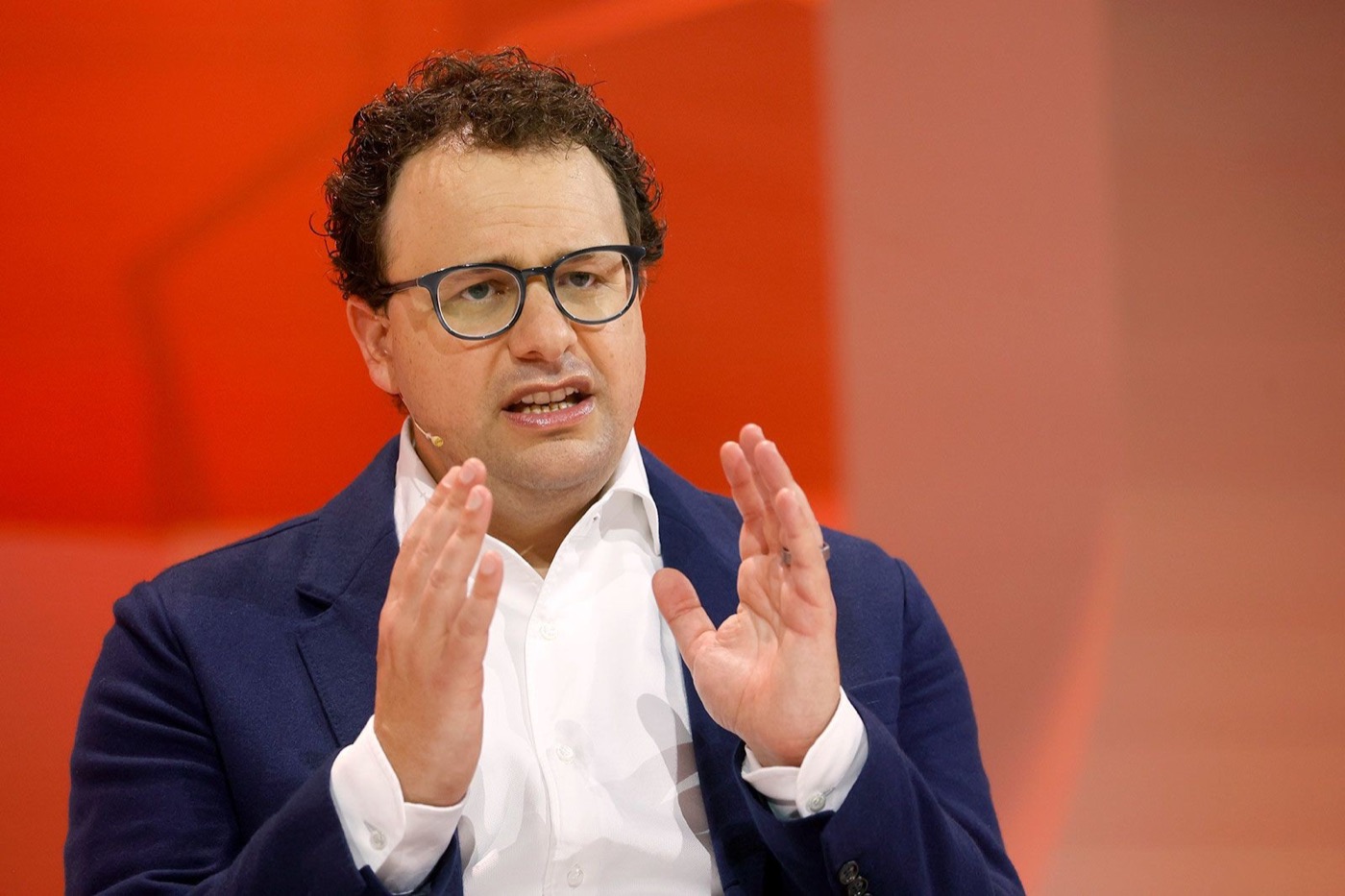
A shortened text of Dario Amodei Interview for the Big Technology Podcast (Alex Kantrowitz)
Recent Actions and Motivations
Alex: You've made several bold moves recently - predicting AI could eliminate half of entry-level white-collar jobs, cutting Windsurf's access to Anthropic's top models when learning OpenAI would acquire them, asking for government export controls. What's driven this urgency?
Dario: As AI systems approach more powerful capabilities, I feel compelled to speak more forcefully about both opportunities and risks. We've observed scaling laws showing AI progressing from barely coherent systems to smart high school level, then college level, now PhD level across economic applications. The urgency comes from these changes accelerating - issues around national security and economics are becoming immediate rather than theoretical.
I want to clarify that despite warnings about risks, I believe deeply in AI's positive potential. I wrote "Machines of Loving Grace" articulating AI's benefits perhaps better than some self-proclaimed optimists. Because we can achieve such positive outcomes if we get this right, I feel obligated to warn about the risks.
Timeline Predictions
Alex: You seem to have a shorter timeline than most industry leaders. Why should we believe your predictions?
Dario: Timeline depends on what you're measuring. I avoid terms like "AGI" and "superintelligence" - they're meaningless marketing terms designed to activate dopamine. What's real is the exponential improvement pattern: every few months we get better models through increased compute, data, and training methods.
We now have two scaling approaches working together - pre-training and reinforcement learning. People struggle with exponentials - if something doubles every six months, two years before it happens it looks like it's only one-sixteenth there.
Look at our revenue growth: zero to $100 million in 2023, $100 million to $1 billion in 2024, and this year we've gone from $1 billion to over $4.5 billion. If this exponential continued for two years, you're looking at hundreds of billions in revenue.
There's maybe a 20-25% chance that models stop improving in the next two years for reasons we don't understand - data limitations, compute constraints, or other factors. If that happens, all my warnings will seem silly. But given the distribution I see, I'm comfortable with that risk.
Scaling and Diminishing Returns
Alex: Many in the industry talk about diminishing returns from scaling. Are they wrong?
Dario: From what we've seen at Anthropic, there are no diminishing returns. Looking at coding specifically, our progression from 3.5 Sonnet through 4.0 Opus shows substantial improvements with each model. On Sweebench, we've grown from 3% to 72-80% performance over 18 months.
The majority of code at Anthropic is now written by or with Claude models. We see continued exponential growth in real usage alongside benchmark improvements.
Continual Learning Limitations
Alex: Dwarkesh Patel highlighted continual learning as a major liability - models don't learn after training. How significant is this limitation?
Dario: Even without solving continual learning, the economic impact potential remains enormous. Imagine having 10 million Nobel Prize winners who can't read new textbooks - they'd still make tremendous biology breakthroughs despite limitations.
Context windows are extending, and models do learn within context during conversations. There's no technical reason we can't reach 100 million word contexts - roughly what humans hear in a lifetime. This fills many gaps.
We're also developing techniques around inner loops and outer loops - optimizing within episodes and learning across episodes. Like reasoning two years ago, this may be another problem that falls to scale plus different approaches.
Competition and Resources
Alex: Companies like Meta and xAI are building massive compute infrastructure. Can Anthropic compete with trillion-dollar companies?
Dario: We've raised nearly $20 billion, which isn't insignificant. Our data center scaling with partners like Amazon is comparable to other companies. Many announced investments aren't fully funded yet or are spread over several years.
Regarding talent poaching, we've seen fewer people leave Anthropic despite aggressive offers. When Meta made acquisition attempts, I told the company we wouldn't compromise our compensation principles or fairness standards. People stay at Anthropic because they believe in the mission - you can't buy genuine alignment.
Business Model and Profitability
Alex: About 60-75% of Anthropic's sales come through API according to reports. Why focus on this pure technology bet?
Dario: We're betting on business use cases, which often come through APIs initially. While OpenAI focuses on consumers and Google on existing products, we believe enterprise AI use will exceed consumer applications.
Consider this thought experiment: if I improve a model from undergraduate to PhD level in biochemistry, maybe 1% of consumers care. But Pfizer might pay 10 times more for that capability. Business focus provides better incentives for advancing model capabilities toward solving real-world problems.
Profitability Structure
Alex: With projected $3 billion losses this year, when will you be profitable?
Dario: Think of each model as a separate venture. Hypothetically: invest $100 million in 2023 model, generate $200 million revenue in 2024. Invest $1 billion in 2024 model, generate $2 billion in 2025. Each model is profitable, but the company appears unprofitable because we're constantly investing in the next generation.
If models stopped improving or we stopped investing in new ones, we'd likely have a viable business with existing models. The "losses" represent investments in exponentially larger future opportunities.
Open Source Competition
Alex: How concerned are you about open source models potentially commoditizing your business?
Dario: Open source works differently in AI than traditional software. You can see model weights but not internal architecture. Many traditional open source benefits don't apply the same way.
When evaluating models like DeepSeek, I don't care if they're open source - I only ask if they're better than ours at relevant tasks. Open source models still require cloud hosting and inference optimization. We're offering similar capabilities through fine-tuning and interpretability interfaces.
I view open source as a red herring. Competition comes down to which models perform best at important tasks.
Personal Background and Motivations
Alex: Growing up in San Francisco during the tech boom, what shaped your interests?
Dario: I had no interest in the tech boom happening around me. I wanted to be a scientist discovering fundamental truths and making the world better. The idea of building websites or founding companies seemed boring compared to physics and mathematics.
Alex: How did your father's illness influence your path?
Dario: My father died in 2006 after a long illness. This drove me from theoretical physics into biology - I wanted to address human illnesses and biological problems. I switched to biophysics and computational neuroscience at Princeton.
Eventually I realized biology's complexity felt beyond human scale. You needed thousands of researchers who struggled to collaborate and combine knowledge. AI appeared to be the only technology that could bridge that gap and bring us beyond human scale to solve biological problems.
Tragically, the cure rate for my father's disease went from 50% to 95% just three to four years after he died. This reinforced the urgency of solving these problems faster.
Is Dario a "Doomer"?
Alex: You've been called a "doomer" despite your optimism about AI benefits. How do you respond?
Dario: I get angry when people call me a doomer, especially those who say I want to slow things down. My father died because cures came a few years too late. I understand the benefits of this technology better than most.
When I wrote "Machines of Loving Grace," I detailed how billions of lives could improve with AI. Some Twitter accelerationists lack humanistic understanding of the technology's benefits - their brains are just full of adrenaline wanting to cheer for something.
These people calling me a doomer completely lack moral credibility. I probably appreciate AI's benefits more than anyone, which is exactly why I feel obligated to warn about risks.
Departure from OpenAI
Alex: You ran GPT-3 development at OpenAI. Why leave if you could drive safety from within?
Dario: Safety requires more than just training models. Organizational decisions matter - when to release things, governance structures, personnel policies, external representation, deployment decisions. You need trustworthy leadership with sincere motivations.
GPT-2 and GPT-3 scaling actually emerged from our AI alignment work. We invented RL from human feedback to steer models toward human intent, but it wasn't working with smaller models like GPT-1. We scaled up models specifically to study these safety techniques.
This showed me that AI capabilities and alignment are more intertwined than people think. You can't easily separate safety and capability development. The real impact comes from organizational-level decisions about responsible development and deployment.
Industry Control Accusations
Alex: Critics like Jensen Huang suggest you want to control the entire AI industry. How do you respond?
Dario: That's an outrageous lie. I've never said anything resembling that claim. We're pursuing what I call a "race to the top" - setting positive examples for the field rather than racing to the bottom.
We were first to publish responsible scaling policies, not to claim superiority but to encourage others to adopt similar practices. We openly share interpretability research, constitutional AI techniques, and dangerous capabilities evaluations, even when they provide commercial advantages.
The goal is industry-wide improvement. When we set examples, people within other companies can point to our practices to advocate for similar policies at their organizations. This creates positive competitive pressure rather than a race to cut corners.
Current Risk Assessment
Alex: Are you concerned that your desire for impact might push you to accelerate potentially uncontrollable technology?
Dario: I've warned about AI dangers more than anyone else in the industry. I have government officials and leaders of trillion-dollar companies criticizing me for discussing these risks. Yet I continue speaking up despite attacks from peers and potential business damage.
This isn't a single-step gamble - it's a multi-step process. We build more powerful models with more intensive testing regimes. As we approach more powerful systems, I speak up more forcefully and take more drastic actions.
We've improved at controlling models with each release. If we reached much more powerful models with only today's alignment techniques, I'd advocate for everyone to stop building them, even China. Export controls might be more effective than voluntary restraint.
The reason I warn about risks is so we don't have to slow down - so we can invest in safety techniques and continue progress. This is a multi-party race involving geopolitical adversaries for whom this is existential. There's little latitude for unilateral action.
Final Thoughts on Responsibility
Both extreme doomers who claim we can logically prove these systems can't be made safe, and accelerationists who say we shouldn't regulate for 10 years, are intellectually and morally unserious.
We need thoughtfulness, honesty, and people willing to act against their immediate interests. We need actual research and insight rather than Twitter hot takes. I'm trying to do this work imperfectly but earnestly. It would help if others approached these high-stakes decisions with similar seriousness.
The stakes involve both incredible benefits - lives that could be saved through medical breakthroughs - and serious risks as models begin taking real-world actions in manufacturing and medical interventions. Both sides deserve serious consideration.